A website form can work perfectly while the inquiry it creates goes nowhere. The missing piece is often the handoff: who owns the request, which context reaches them and when the next action is due. A reliable lead follow-up process connects the submitted form to a useful sales conversation without asking the customer to repeat everything.
Capture enough context for the first useful response
A named package selection tells the sales team something different from a freeform budget range. Preserve which offer or package the visitor selected. For other services, retain the stated need and budget without forcing the inquiry into an unrelated package.
Keep the original message, contact information, submission time and source context. Do not replace the buyer’s words with a vague category. Ask only for information the team can use at this stage; a long discovery questionnaire can wait until the right conversation.
Assign the next action to a person
HubSpot’s overview of lead management includes capture, qualification, routing and nurturing. For a smaller operation, the immediate practical requirement is simpler: every valid inquiry needs an accountable owner and a visible next action.
Agree routing by service, territory or existing account ownership as appropriate. Include a fallback for unmatched inquiries and absent team members. An automated acknowledgment can confirm receipt, but it should not be counted as a substantive response from the person handling the request.
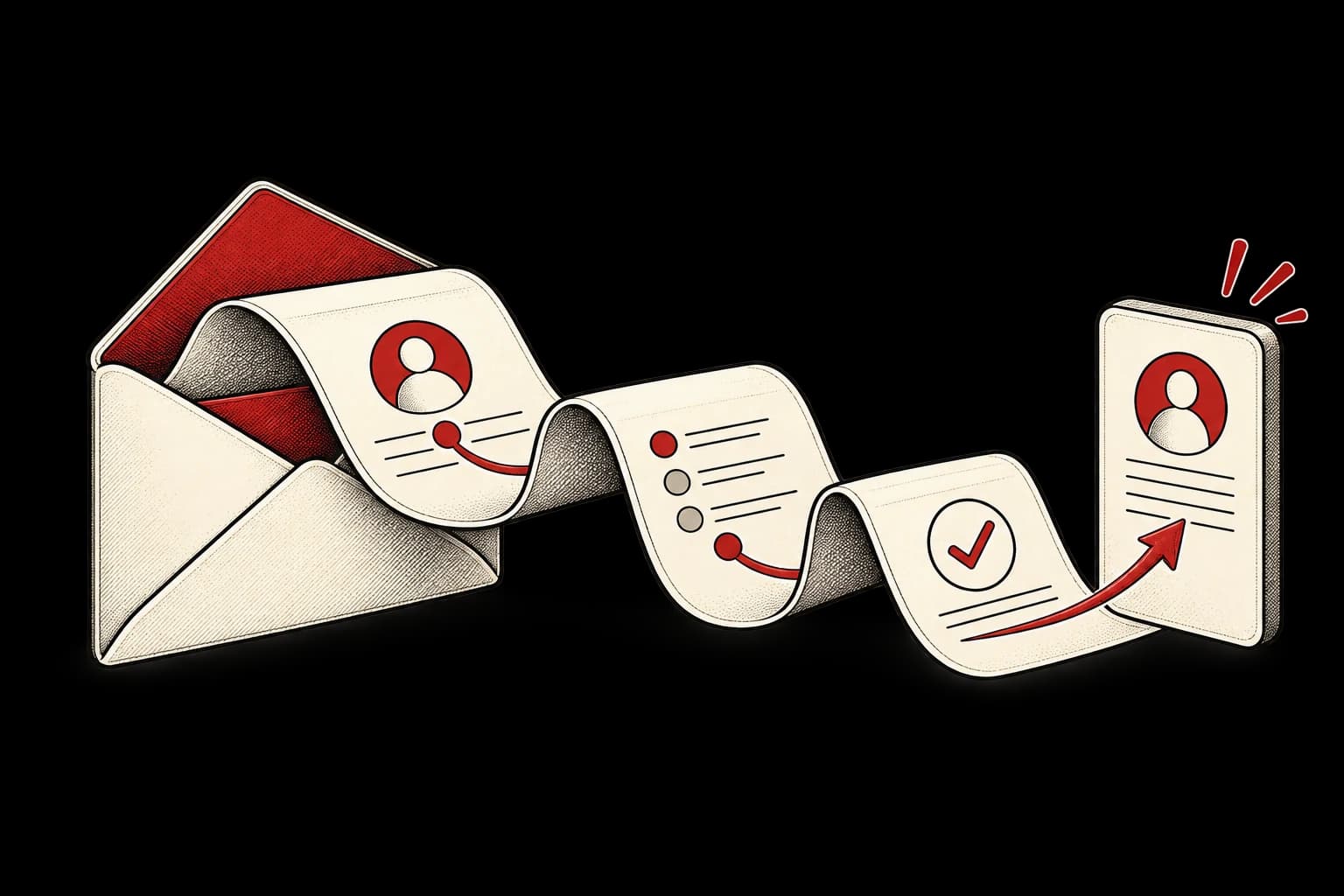
- Received: request saved and ready for review.
- Assigned: one person owns the next response.
- Clarifying: specific missing information has been requested.
- Quoted: a proposal has an owner, version and follow-up date.
- Closed: outcome recorded with a useful reason.
ReferenceHubSpot: the lead management process
Keep attribution attached without treating it as certainty
Use a consistent campaign naming convention and preserve the source information available at submission. Google Analytics documents UTM parameters for identifying referring campaigns. Those labels help connect a form entry to a marketing activity; they do not prove that one activity alone caused the sale.
Keep first contact context distinct from later sales notes. A buyer may return through a different channel or share a link with a colleague. Record unknown sources honestly and avoid silently assigning all unmatched inquiries to the current campaign.
Plan for failed delivery and duplicate submissions
If the CRM is temporarily unavailable, a successful website confirmation should still correspond to a saved inquiry. The integration needs a retry path and a stable submission identifier so the same request is not imported twice. The exact design depends on the website and CRM, but the operating requirement is clear: a temporary outage should not silently erase demand.
Include a review for submissions that have not reached the CRM, incomplete assignments and failed notifications. Test with synthetic records through the whole route, including the final sales view. A successful HTTP response alone does not establish that an owner can see the selected package and original message.
Review follow-up quality before buying more traffic
Look at unassigned inquiries, time to a useful response, overdue next actions and quotes with no recorded outcome. Compare like-for-like inquiry types. A complex distributor quote and a simple service question should not be treated as identical work.
DevCamp360 Commerce Growth can cover agreed sales-follow-up improvements within its shared monthly capacity. It does not include outsourced sales closing or a full CRM rebuild. If the requirement needs a new internal application, substantial integration or a broader operating change, define a separate project and budget. Bring a few anonymized inquiry journeys so the discussion starts with an actual handoff.
Commerce Growth & Sales Operations
Commerce Growth can improve agreed inquiry assignment and sales-follow-up workflows. A substantial CRM build or custom integration requires its own scope and budget.
Commerce Growth · $900 USD/month · 30 combined team-hours
One store, named sales context and agreed social accounts. Channels, post quantities, creative needs and response coverage are agreed monthly within capacity; not every activity runs simultaneously. Unlimited posting, 24/7 moderation, paid links, major development and a CRM rebuild are excluded. Specialist production is scoped separately. Ads management is optional; media spend is separate.