A redesign changes more than appearance. It can alter how customers understand the business, how search engines interpret pages, how leads move into the operating system, and how the team measures demand. Continuity needs to be designed into the release.
Start with the commercial story
A modern interface cannot rescue unclear positioning. Before changing layouts, the business should define the problems it solves, the people it serves, the evidence it can support, and the next action each visitor should understand.
This creates a content and conversion architecture. Visual design then gives that architecture hierarchy, emotion, pace, and credibility instead of decorating disconnected copy.
Inventory search and conversion assets
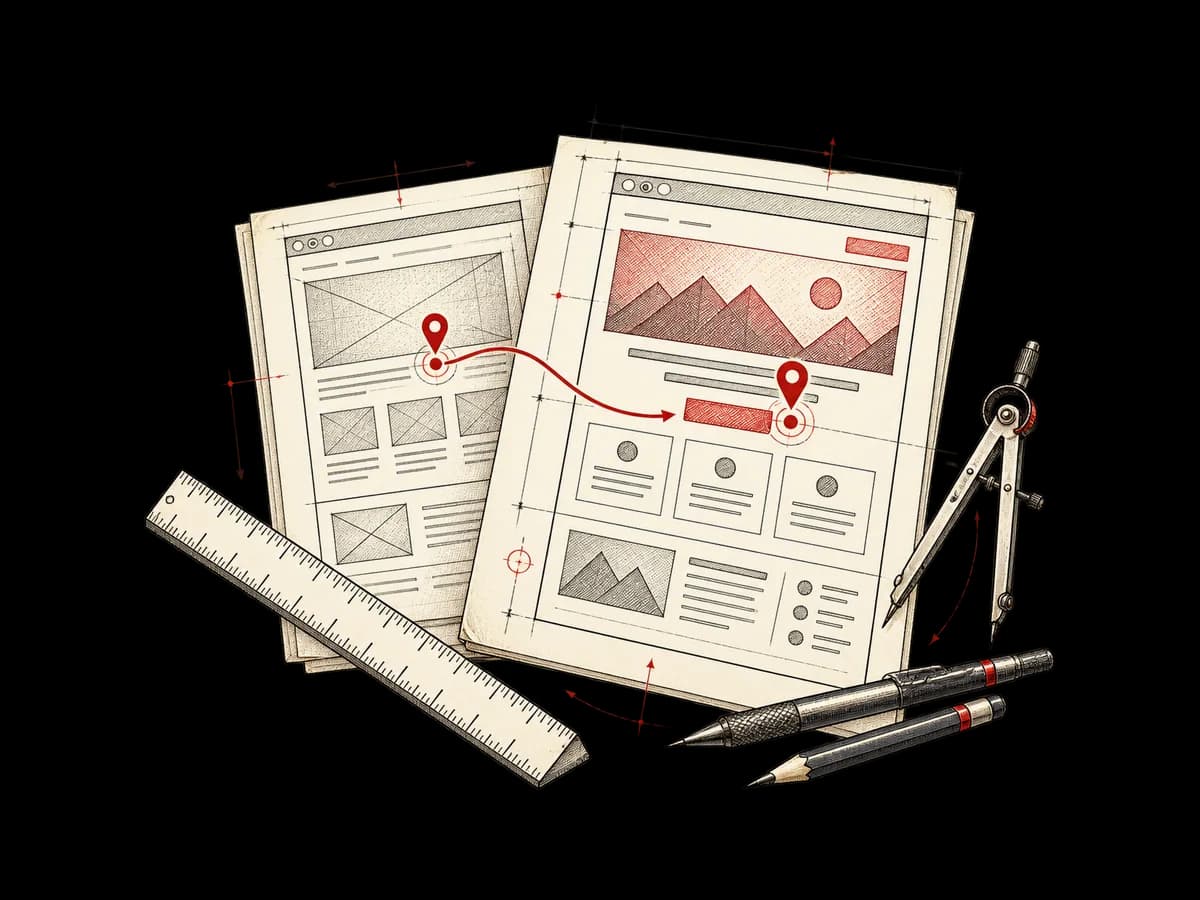
Existing pages may carry rankings, backlinks, branded demand, assisted conversions, or customer references even when the current design feels dated. A redesign plan should identify which assets must be preserved, consolidated, redirected, or intentionally retired.
- Indexable URLs, canonical targets, metadata, headings, and internal links
- Pages receiving qualified organic entrances or valuable backlinks
- Forms, analytics events, consent states, and lead-source context
- Images, case evidence, downloadable assets, and structured data
- Redirects, error states, sitemap updates, and post-launch monitoring
Treat forms as production integrations
A consultation form is part of the customer and operating journey. It needs accessible labels, clear consent, useful error states, idempotent submission behavior, abuse protection, and an environment-specific route into the business system.
The confirmation should tell the visitor what happened and preserve a reference the team can trace. A beautiful form that silently drops context is a business failure, not a design success.
Release, observe, and protect the boundary
The accepted release should move through staging and production with the same controlled path. Redirects, metadata, forms, analytics, performance, accessibility, and primary conversion journeys should be tested before promotion.
After launch, monitor crawl behavior, errors, conversion events, lead quality, and real-user experience. Organic growth comes from useful content and a reliable foundation—not from treating SEO as a checklist added after the redesign.